In 2020, the World Economic Forum launched Education 4.0. This was in response to the rapidly changing use of technology in education and the rise of Large Language Models. At its core, Education 4.0 is about humans coexisting with the Internet and other modern technologies and focusing on how to learn, how to think, and how to prepare ourselves for the future. This is a development from old styles of education, where rote learning, standardisation and, later, the simple use of the Internet for research. Many countries have already begun to adopt thinking associated with Education 4.0 into their national curricula and Little Project Manager wholeheartedly promotes this new style of learning. (Incidentally it is important to note the terminology in this area: for example, Egypt's Education 2.0 incorporates many elements of Education 4.0 thinking but its title comes from the fact that this is the second version of that national curriculum.)
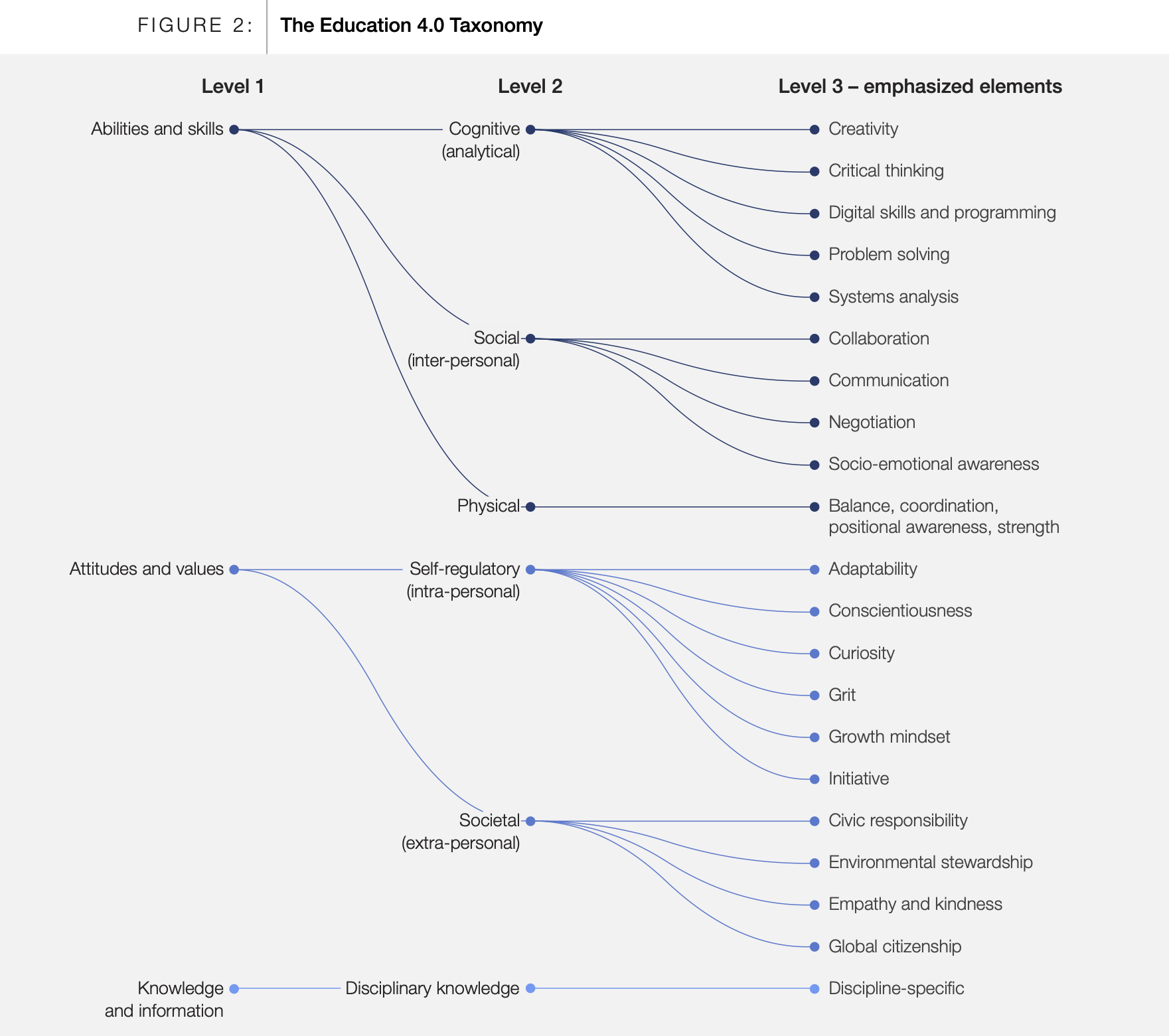
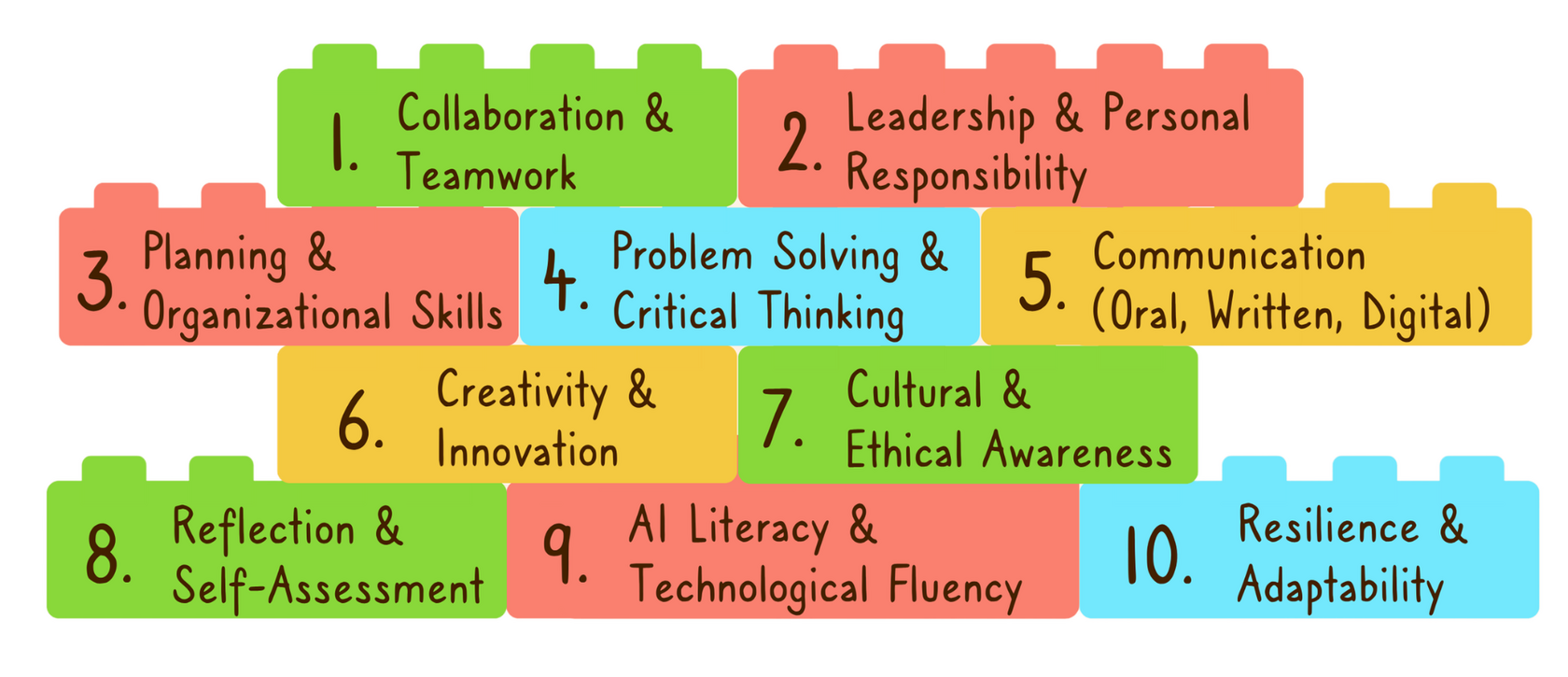
In the white paper on Education 4.0, published by the WEF, a framework is set out to help understand what the key priorities of this new style of education are. At the highest level, the taxonomy is broken down into Abilities and Skills, Attitudes and Values, and Knowledge and Information. These are each further broken down into smaller categories and finally into specific elements. These third level elements include skills such as critical thinking, digital skills, problem-solving, collaboration, communication, creativity, and global citizenship. When we compare this with Little Project Manager's ten core skills it is clear to see the fundamental similarities and the shared belief that the main focus should be on skills rather than knowledge. It is these skills that we are instilling in children through our Little PM units.
With regard to Attitude and Values, the white paper refers to these as the reason something should be done rather than how we actually enact this. In today's world where AI proliferates, this idea of developing motivation, effort and purpose in children is critical. In a recent discussion at the WEF summit in Davos, Anna Vignoles (Director of the Leverhulme Trust) commented that AI in education has to "prompt more effort" from students rather than allowing students to become passive and reliant on the technology. In all Little PM units that involve AI, the focus is always on how to use AI effectively, critically and for specific purposes.
With regard to the Experiences that the Education 4.0 white paper refers to, again there is a shared vision that skills can only be developed through concrete tasks. The Little PM pedagogy is strongly influenced by the work of theorists such as Piaget, Papert and Kolb, all of whom emphasise the experiential and practical dimension of learning. Diving further into this aspect of Education 4.0, the white paper gives examples of projects that helped to develop different skills: the examples given show that depending on the task, different skills will be developed to a different level and not all skills will be included each time. This is exactly how the units in Little PM have been designed: each unit will have a key skill as a focus but other skills will inevitably be developed; it is impossible to develop leadership without also improving communication skills.
The white paper also focuses on the social aspect of learning and includes this in a separate section under the skills in its taxonomy. The authors comment how interpersonal skills can sometimes be lacking in education and the collaborative nature of all Little PM units is something that aims to tackle this. The pedagogical theories developed by Vygotsky are another inspiration for what we do at Little PM and we always want to emphasise the undeniable impact that social skills have on creating learning. In the same panel discussion at the Davos summit, Anna Vignoles describes education as "an inherently collective endeavour", which is why we must be cautious as the availability of personalised AI tutors becomes more widespread and brings the risk of isolation in education.
Since the Education 4.0 white paper is developed by the WEF it is to be expected that there are links to how these skills relate to employability. Indeed, the skills laid out in this paper were designed to link to the WEF's Global Skills Taxonomy and we must always consider how classroom experiences relate to the real world. In the discussion, Omar Abbosh (CEO of Pearson) said that "employees need to get better at signalling future demand" and whilst this does link to a necessity to develop modern skills in the classroom, we need to remember that this has to be a dynamic process. It is important to talk about the parallels between skills in the classroom and skills in the workplace, but given the rate of change of technology and AI, the nature of the workplace will be very different when current primary-age children reach it. Therefore, I would suggest that, while it's important to teach children how to use AI appropriately, it is even more useful to focus on the general skills behind AI literacy. For example, if we instil general problem solving skills in children they can adapt to new systems and new technology as it develops. Similarly, if we teach children critical thinking skills and e-safety then they will be able to effectively use any new technology that is developed as they progress towards the workplace.
Finally, it is important to consider that, although AI is something educators need to discuss seriously, we also have to remember that upskilling our children to be prepared for the workplace is not, nor should it ever be, the only focus of school. The OECD recently published its own paper entitled Education for Human Flourishing, which includes a guiding principle of helping children develop cognitive, creative and caring capabilities. Any new advances in education must remember to keep the humanity in childhood.