Recently Little Project Manager has been working with experienced Early Years practitioners to bring our exciting approach to young children because we believe that our skills are just as important for children to develop in an EYFS setting as they are in the primary classroom.
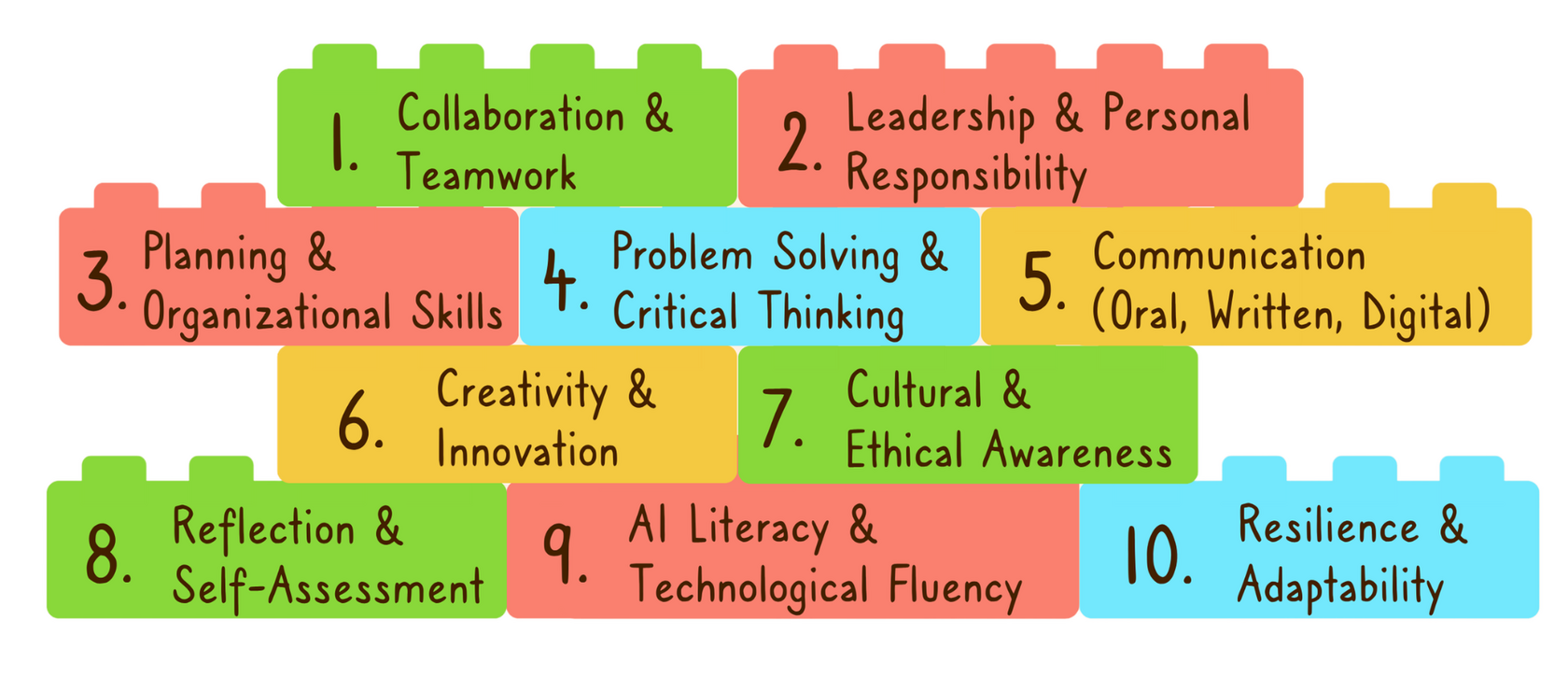
The image accompanying this post shows our 10 core, interconnected skills: Collaboration and Teamwork; Leadership and Personal Responsibility; Planning and Organisation; Problem Solving and Critical Thinking; Communication; Creativity and Innovation; Cultural and Ethical Awareness; Reflection and Self-Assessment; Digital Literacy and Technology; Resilience and Adaptability.
The image accompanying this post shows our 10 core, interconnected skills: Collaboration and Teamwork; Leadership and Personal Responsibility; Planning and Organisation; Problem Solving and Critical Thinking; Communication; Creativity and Innovation; Cultural and Ethical Awareness; Reflection and Self-Assessment; Digital Literacy and Technology; Resilience and Adaptability.
You may wonder whether it is realistic to expect children of such young age (3-5) to grasp these skills; however, if it applied properly, these are exactly the skills that we want children to be learning from the start of their education as they will equip them with the tools they need to take a more active role in their learning as they progress.
Educational theorists such as Piaget and Papert wrote extensively about the need for children's learning to be active, collaborative, situated in real world contexts and, fundamentally, be constructed by the learner. Papert's ideas are particularly appropriate for an Early Years context as he advocated for the development of learners producing tangible artefacts to show their understanding and which can then be discussed in a reflective way with their peers. Of course, the role of the teacher and other adults in the classroom is vital in order to allow children to make the most of the activities. To that end, we believe that the Little Project Manager units are best supported with sustained shared thinking: the children take the lead in the tasks but they are supported by high-level questioning and prompts from the adult to extend the child's thinking and provide them with appropriate challenge.
From a practical stance, we felt it was best for our early units to largely focus on a single skill, compared to the units that we have designed for primary schools, which tend to encompass a blend of the 10 skills. A focus on a single skill reduces the cognitive load and allows children to focus on the mastery of one area. This is not to say that other skills will not be simultaneously developed (it is hard to imagine a teamwork focused task that does not involve communication) but this was the main difference in approach when creating units for the early years. In a similar way to our primary units always being linked to the curriculum (whether this be the English National Curriculum or others) all our early units are currently linked to the English Curriculum's EYFS Areas of Learning but could also easily adapted for various contexts.
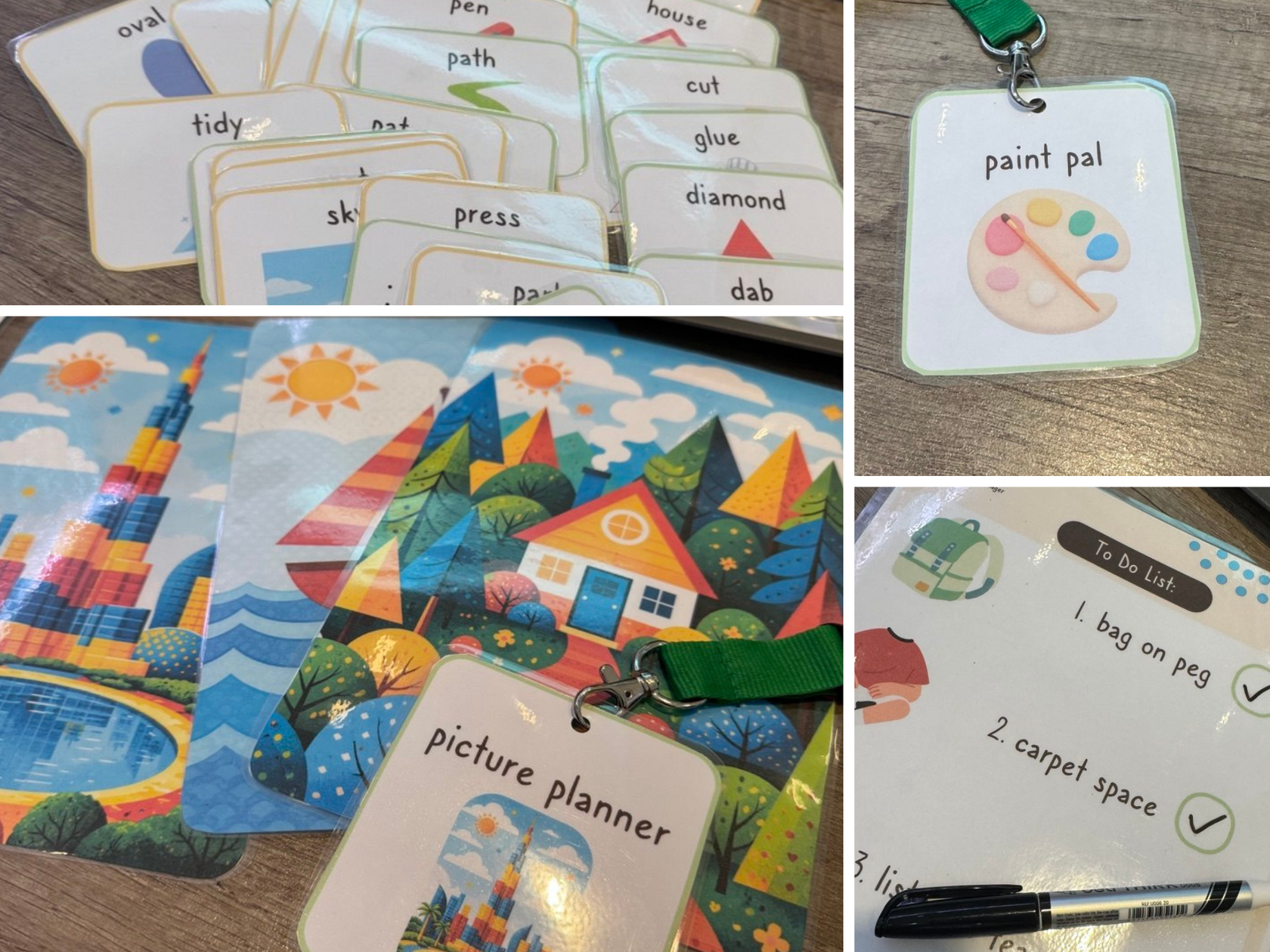
One example of a unit that we have developed earlier is called Sharing Mealtimes: this unit has its focus on cultural and ethical awareness and puts children in the driving seat of a role-play activity. In groups, children will take in turns to act out what a meal time in their home looks like – this might be an everyday meal or a meal for special occasion. The pack for the teachers and children contains a wide variety of flashcards with images and key basic words that will help the children to lead their peers through this scenario. Other units we have created include a collaborative artwork task and a task where children take the role in creating and carrying out various classroom jobs.
We have already completed some successful trials of these units in Early Years settings and we are keen to find more educators who are excited to pilot these units in their own setting. If you're interested, please don't hesitate to reach out - we we would love to speak to you!
(I am grateful to the research of Pearl Chen, Jennifer Kretchmar and Iram Siraj-Blatchford on constructionism and wider Early Years pedagogy)